
What Faucet Types Suit Different Bathroom Projects?
Choosing the right faucet for a bathroom project involves more than selecting an attractive design. Buyers need to consider installation conditions, water supply requirements, daily usage, maintenance access, user preferences, and the overall positioning of the property. A faucet suitable for a residential apartment may not meet the durability or maintenance requirements of a hotel, commercial restroom, or luxury development. For importers, distributors, and project contractors, understanding the differences between faucet types helps prevent specification mismatches, reduce installation problems, and maintain consistent purchasing standards across multiple units. The most suitable choice depends on how the bathroom will be used, the available plumbing layout, and the expected performance throughout its service life.
1. What Are The Main Types Of Bathroom Faucets?
Bathroom faucets come in several configurations, each designed for different installation conditions and user requirements. Before placing a bulk order, buyers should understand how these products differ in structure and application.
| Faucet Type | Installation | Common Applications |
|---|---|---|
| Single-Hole Faucet | One mounting hole | Apartments, guest bathrooms |
| Centerset Faucet | Three holes with compact spacing | Residential bathrooms, hotels |
| Widespread Faucet | Separate handles and spout | Premium residential bathrooms |
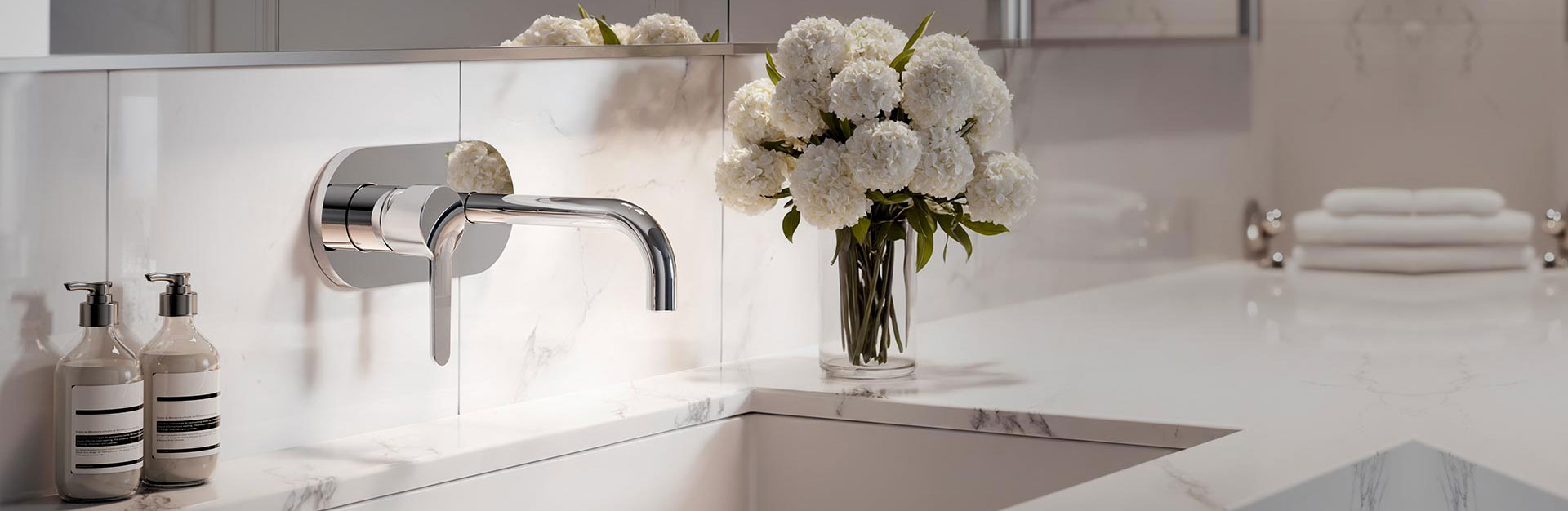
| Wall-Mounted Faucet | Installed on the wall | Modern bathrooms, luxury projects |
| Vessel Sink Faucet | Mounted above the countertop | Countertop vessel basins |
| Tall Basin Faucet | Deck-mounted with an extended height | Raised countertop basins |
| Single-Handle Faucet | One control lever | Residential and commercial bathrooms |
| Double-Handle Faucet | Separate hot and cold controls | Traditional and classic interiors |
The installation method and basin structure should be confirmed before choosing a specific model. A faucet with the wrong spout height or mounting configuration may cause splashing, restricted hand clearance, or additional plumbing work.
2. Which Faucets Are Suitable For Residential Projects?
Residential developments usually require a balance between appearance, ease of use, installation compatibility, and purchasing cost. Different property types may have different expectations.
Apartments and Standard Housing
Single-hole and centerset faucets are common choices for apartment projects because they simplify installation and fit many standard basin configurations. Single-handle controls also make temperature and water flow adjustments straightforward.
High-End Residential Properties
Widespread and wall-mounted faucets are often selected for premium bathrooms. Their separated components or concealed plumbing arrangements allow more flexibility in coordinating the faucet with countertop materials, basin shapes, and interior design.
Small Bathrooms
Compact faucets with shorter spouts can help maintain usable countertop space. Buyers should still check the distance between the spout outlet and basin drain to avoid water splashing.
For residential projects, consistency across different bathroom layouts is another purchasing consideration. Selecting a product range with compatible finishes and coordinated designs can simplify procurement and interior planning.
3. What Faucet Types Work Best For Hotels?
Hotel bathrooms experience frequent use, and product selection must account for operational demands rather than appearance alone. Maintenance teams also need products that are straightforward to inspect, repair, and replace.
Single-Handle Faucets: Easy for guests to operate and convenient for routine maintenance.
Deck-Mounted Faucets: Suitable for standardized vanity countertops and relatively straightforward installation.
Wall-Mounted Faucets: Appropriate for selected premium rooms where concealed plumbing and coordinated basin designs are required.
Durable Brass Faucets: Worth considering where frequent operation and long-term service are expected.
For hotel procurement, buyers should evaluate cartridge performance, leakage resistance, surface finish consistency, and spare component availability. Standardizing faucet models across room categories can also reduce maintenance complexity and simplify replacement stock management.
4. How Should Buyers Match Faucets With Different Basin Designs?
Basin compatibility is one of the most important factors in faucet selection. Even a well-designed faucet may perform poorly if its height, reach, or mounting position does not match the basin.
| Basin Type | Recommended Faucet | Selection Consideration |
|---|---|---|
| Undermount Basin | Standard or medium-height faucet | Spout reach and countertop clearance |
| Countertop Vessel Basin | Tall basin faucet | Spout height above the basin rim |
| Integrated Basin | Single-hole or centerset faucet | Existing mounting holes |
| Wall-Hung Basin | Wall-mounted or compact deck faucet | Plumbing position |
| Double Basin Vanity | Two individual faucets | Matching installation dimensions |
Three measurements deserve particular attention:
Spout Height: The outlet should provide enough clearance for comfortable handwashing without creating excessive splashing.
Spout Reach: Water should fall close to the basin drain rather than hitting the rear wall or outer edge.
Mounting Dimensions: Hole diameter, spacing, countertop thickness, and connection positions must match the installation requirements.
Requesting technical drawings before confirming production can help prevent compatibility problems during installation.
5. What Should Buyers Consider For Commercial Bathrooms?
Commercial bathrooms in offices, shopping centers, restaurants, and public buildings often have different requirements from private residential spaces.
High user frequency makes durability and maintenance important. Buyers should pay attention to the following specifications:
Cartridge Quality: Reliable internal components help maintain smooth operation and reduce leakage risks.
Material Selection: Brass and stainless steel options should be evaluated according to project specifications and water conditions.
Surface Treatment: Consistent plating or coating helps maintain appearance under regular cleaning.
Water Flow: Outlet performance should meet the project's functional and applicable regulatory requirements.
Maintenance Access: Standardized components make inspection and replacement easier.
For large commercial developments, procurement teams should also confirm whether the selected faucets meet applicable local plumbing standards. Certification requirements can vary between destination markets.
6. How Do Buyers Choose The Right Faucet For Bulk Orders?
When purchasing faucets for multiple properties or distribution channels, buyers should evaluate more than the unit price. Product consistency, packaging, production capacity, and technical specifications can directly affect project execution.
A practical purchasing checklist includes:
| Evaluation Item | What Buyers Should Confirm |
|---|---|
| Product Dimensions | Spout height, reach, and mounting size |
| Main Material | Brass, stainless steel, or specified alternatives |
| Cartridge | Type, operating performance, and serviceability |
| Surface Finish | Color consistency and finish durability |
| Water Connections | Inlet size and installation compatibility |
| Quality Inspection | Leakage, pressure, and functional testing |
| Packaging | Protection against scratches and transportation damage |
| Supply Capacity | Production lead time and repeat-order consistency |
For OEM and ODM projects, buyers should also confirm customization details, including handle shapes, spout designs, surface finishes, packaging requirements, and technical specifications. Approved samples and documented product standards provide a reference for subsequent production batches.
Conclusion
The best faucet type depends on the bathroom layout, basin configuration, expected usage frequency, and project budget. Residential developments may prioritize installation flexibility and cost efficiency, while hotels and commercial buildings generally place greater emphasis on durability, maintenance, and consistent specifications. By evaluating these factors before procurement, buyers can select suitable faucet models, reduce installation issues, and improve purchasing efficiency across different bathroom projects.