
How Do You Match Faucets With Bathroom Styles?
A bathroom faucet is a functional fixture, but its shape, finish, proportions, and installation style also influence the overall appearance of the space. For interior designers, project contractors, sanitary ware distributors, and bathroom product retailers, selecting a faucet that complements the surrounding design can make a noticeable difference in the finished project. A modern bathroom may require clean lines and understated finishes, while a traditional interior often looks more balanced with curved spouts and decorative handles. However, visual coordination should not come at the expense of installation compatibility or daily usability. Buyers need to consider the basin design, countertop materials, bathroom color scheme, and intended user experience when selecting faucet collections for different markets.
Understanding The Relationship Between Faucet Design And Interior Style
Different bathroom styles have distinct visual characteristics. Choosing a faucet with compatible proportions and detailing helps create a more consistent appearance.
| Bathroom Style | Recommended Faucet Design | Suitable Finishes |
|---|---|---|
| Modern Minimalist | Straight spouts, simple handles | Chrome, matte black |
| Contemporary | Geometric shapes, streamlined profiles | Brushed nickel, brushed gold |
| Traditional | Curved spouts, detailed handles | Polished brass, chrome |
| Industrial | Angular bodies, exposed mechanical details | Matte black, brushed steel |
| Scandinavian | Compact shapes, understated detailing | Chrome, brushed nickel |
| Luxury | Sculptural forms, refined proportions | Brushed gold, polished finishes |
These combinations provide general design guidance. Actual selections should also account for the basin, lighting, hardware, and other bathroom fixtures.
1. Modern And Minimalist Bathrooms
Design direction: Clean geometry and visual simplicity
Modern minimalist bathrooms generally emphasize uncluttered surfaces, simple forms, and functional layouts. Faucets with straight spouts, slim handles, and geometric bodies work well in these environments.
Single-handle Basin Faucets are particularly suitable because they reduce visual complexity while providing convenient temperature and flow control.
Matte black can create contrast against white countertops, while chrome provides a brighter appearance that fits neutral interiors. For projects using integrated basins and floating vanities, buyers should pay attention to faucet height and spout reach to maintain balanced proportions.
2. Luxury And Contemporary Bathrooms
Design direction: Refined finishes and distinctive details
Luxury bathroom projects often use natural stone, large-format tiles, decorative mirrors, and premium countertop materials. The faucet should complement these elements without becoming visually overwhelming.
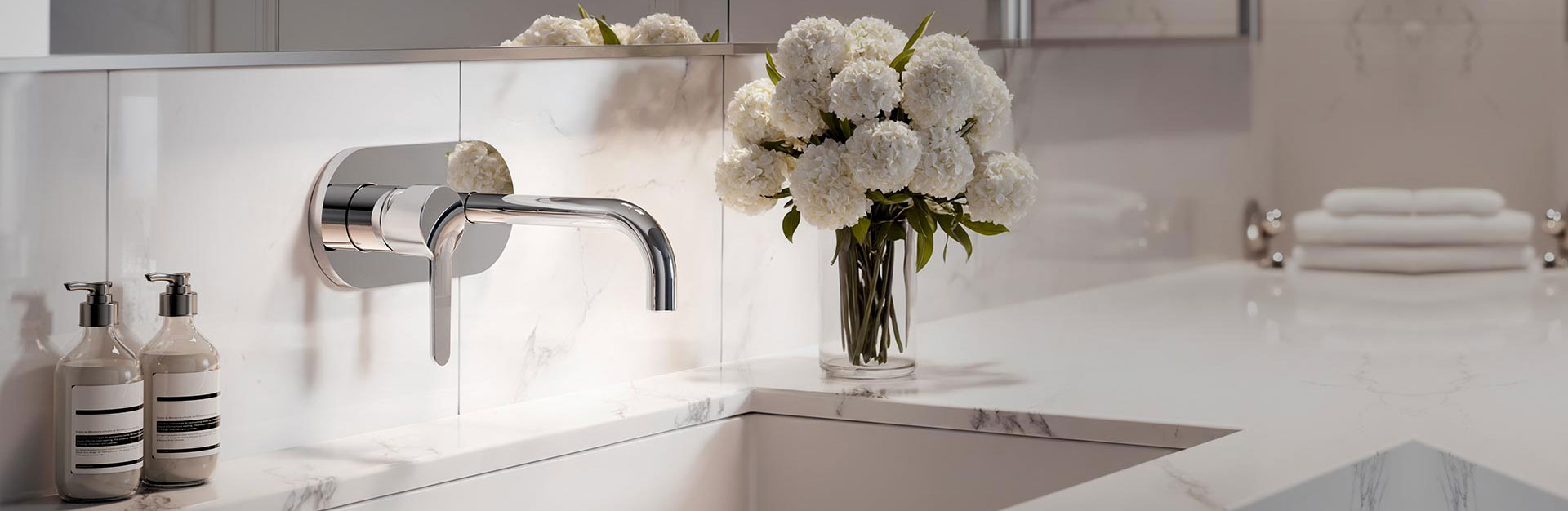
Widespread basin faucets and wall-mounted designs are common options for this style. Their separated or concealed installation arrangements can create a more deliberate visual composition.
Popular considerations include:
Brushed gold finishes for warm and elegant interiors.
Brushed nickel for a softer metallic appearance.
Polished chrome for bright, reflective surfaces.
Sculptural spouts for distinctive design statements.
For hotel suites and high-end residential developments, coordinating basin faucets, shower controls, and other bathroom hardware can help maintain a consistent design language.
3. Traditional And Classic Bathroom Interiors
Traditional bathrooms often incorporate decorative mirrors, detailed cabinetry, natural stone, and warm color palettes. Faucets with curved spouts, rounded bodies, and separate hot and cold handles can complement these features.
Widespread faucets are particularly suitable when the countertop has sufficient mounting space. Their proportions can create a balanced appearance around larger basins.
Polished brass and chrome are common finish choices. Buyers developing traditional product collections should pay attention to handle detailing, spout curvature, and the relationship between faucet height and basin dimensions.
4. Industrial And Urban Bathroom Designs
Industrial interiors typically combine concrete textures, dark surfaces, exposed materials, and strong geometric elements.
Faucets with angular profiles, visible structural details, and darker finishes can reinforce this aesthetic. Matte black and brushed stainless steel are practical options for coordinating with dark bathroom accessories.
Wall-mounted faucets may also suit industrial-inspired layouts, particularly where exposed plumbing or distinctive wall finishes form part of the design.
However, installation positions must be planned carefully. Buyers should confirm pipe connections, mounting heights, and wall construction before specifying these products for a project.
How Do Faucet Finishes Influence Bathroom Coordination?
Surface finish affects how a faucet interacts with lighting, countertop materials, and surrounding hardware. Even when two faucets have identical structures, different finishes can create noticeably different visual effects.
| Finish | Visual Characteristics | Suitable Combinations |
|---|---|---|
| Chrome | Bright and reflective | White ceramic, marble |
| Matte Black | Bold and understated | Concrete, dark tiles |
| Brushed Nickel | Soft metallic texture | Gray stone, neutral colors |
| Brushed Gold | Warm and refined | Beige marble, wood |
| Polished Brass | Rich and traditional | Classic cabinetry, warm interiors |
| Brushed Stainless Steel | Subtle industrial appearance | Concrete, natural stone |
For large residential or hospitality projects, finish consistency deserves particular attention. Basin faucets, shower controls, towel bars, and other accessories should be compared under similar lighting conditions before final approval.
What Should Buyers Consider When Selecting Faucets For Bathroom Projects?
Design compatibility is only one part of the selection process. Procurement teams should also evaluate several practical requirements before confirming their product specifications.
Basin Compatibility
Check mounting hole positions, countertop thickness, spout reach, and basin depth. Vessel basins may require taller faucets, while compact basins often need shorter spouts.
User Convenience
Handle positioning and operating mechanisms should suit the intended users. Single-handle designs are convenient for many residential and commercial applications.
Maintenance Requirements
Consider whether the faucet finish is compatible with the cleaning products used in the property. Easy-to-clean surfaces can simplify routine maintenance.
Product Coordination
For projects involving multiple bathrooms, select compatible faucet designs and finishes across different product categories. This helps maintain a consistent appearance without requiring identical products in every space.
Supply Consistency
Distributors and project buyers should confirm whether the selected finish, model, and specifications can be maintained across repeat orders.
How Can Distributors Build A More Attractive Faucet Collection?
For wholesale buyers, offering products across several bathroom styles can help reach different customer groups. Instead of purchasing many unrelated designs, distributors can organize their collections around recognizable design directions.
A practical product assortment might include:
Essential Collection: Standard chrome faucets for apartments and general residential projects.
Modern Collection: Geometric designs and matte finishes for contemporary interiors.
Premium Collection: Widespread and wall-mounted faucets for luxury developments.
Classic Collection: Curved spouts and decorative handles for traditional bathrooms.
This approach makes product presentation more organized and helps retailers or contractors identify suitable models for their projects. It also allows buyers to compare products within a consistent design category.
Conclusion
Matching faucets with bathroom styles requires balancing visual design, installation compatibility, and practical performance. Modern interiors generally benefit from streamlined shapes, while traditional and luxury spaces may require more distinctive forms and finishes. For B2B buyers, understanding these design relationships helps build coordinated product collections, improve project specifications, and select faucet models that meet different market preferences.